Offering roof space for solar
Which roofs qualify, why grid connection and structural capacity come before orientation, and which details make a listing usable.
· 3 min de lectura · actualizado el 14 de septiembre de 2026
Esta guía está disponible en alemán e inglés. Estás leyendo la versión en inglés.
Letting a roof for a solar installation is a different proposition from offering a parking spot. It concerns equipment that stays up there for many years, and an investor looks accordingly closely beforehand. The good news: almost everything they look at, you can write down in advance.
Use the solar lease calculator to estimate an illustrative annual range for your roof in Germany. It does not replace assessment of the individual project.
What counts first is not the area
The obvious starting point would be square metres. In practice two other things decide first whether a roof is viable at all.
The grid connection. The electricity generated has to go somewhere. An existing medium-voltage connection or a substation nearby speeds the process up considerably; if the nearest connection point is far away, a project can fail on that alone (SunShine Group).
Structural capacity. An installation adds weight, in the order of 15 to 25 kilograms per square metre depending on the design. Whether your roof carries that is settled by a structural report, whose cost the investor covers in the common models (dachverpachten.net).
Both are things you know or can establish with one phone call. Both belong in the description.
Roof type, orientation, pitch
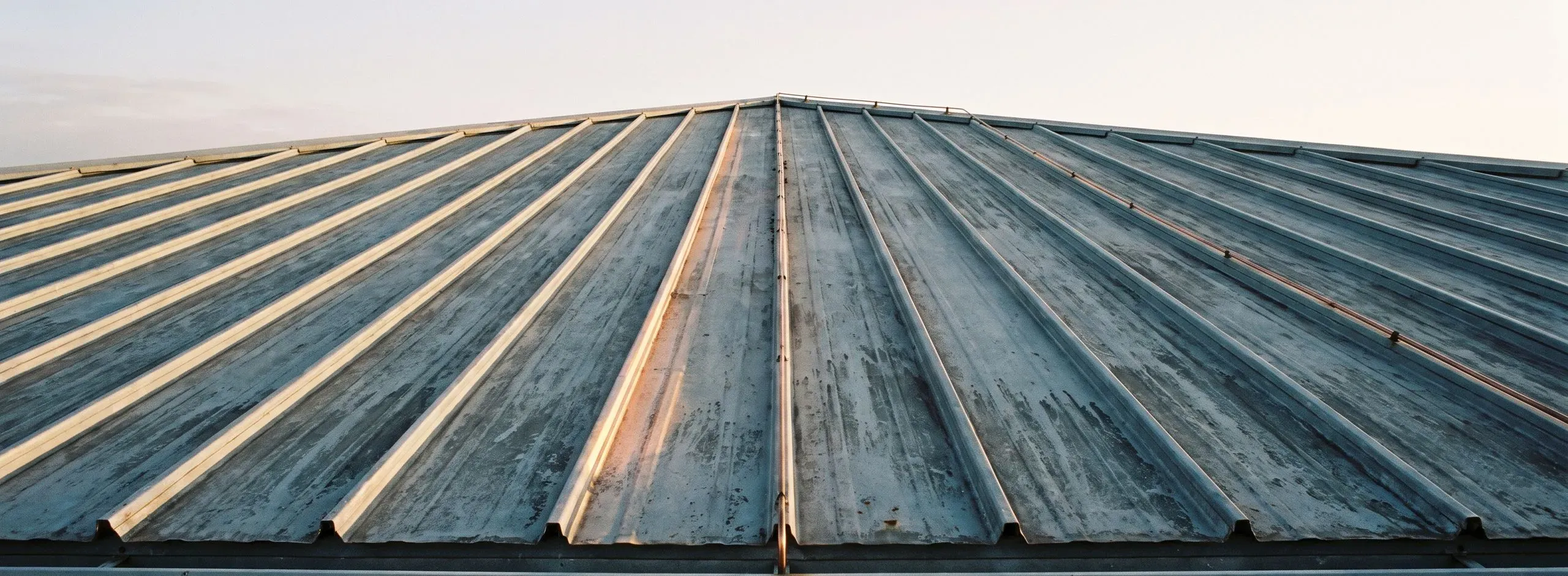
Flat roofs and trapezoidal sheet-metal hall roofs are preferred, because they offer large uninterrupted areas without fixtures. Pitched roofs are viable too.
On orientation, south at a shallow pitch counts as ideal, but east-west layouts have long been standard on flat roofs. A roof is not unsuitable merely because it does not face south. Simply state what is there: roof type, orientation, approximate pitch, age of the roof covering.
That last point matters more than it sounds. An installation stays up for a long time, and a covering due for renewal in five years makes a project complicated.
What gets in the way
Fixtures cost area and planning: rooflights, extractors, lift overruns, chimneys, aerials. Shading from neighbouring buildings or trees counts too.
None of it need be off-putting, but it should be in the listing. An investor who can estimate from the description how much contiguous area remains gets in touch sooner than one who finds out at a site visit.
How you enter it
When publishing, the Details step asks the relevant questions once you have picked Solar among the use types. The grid connection is one of them.
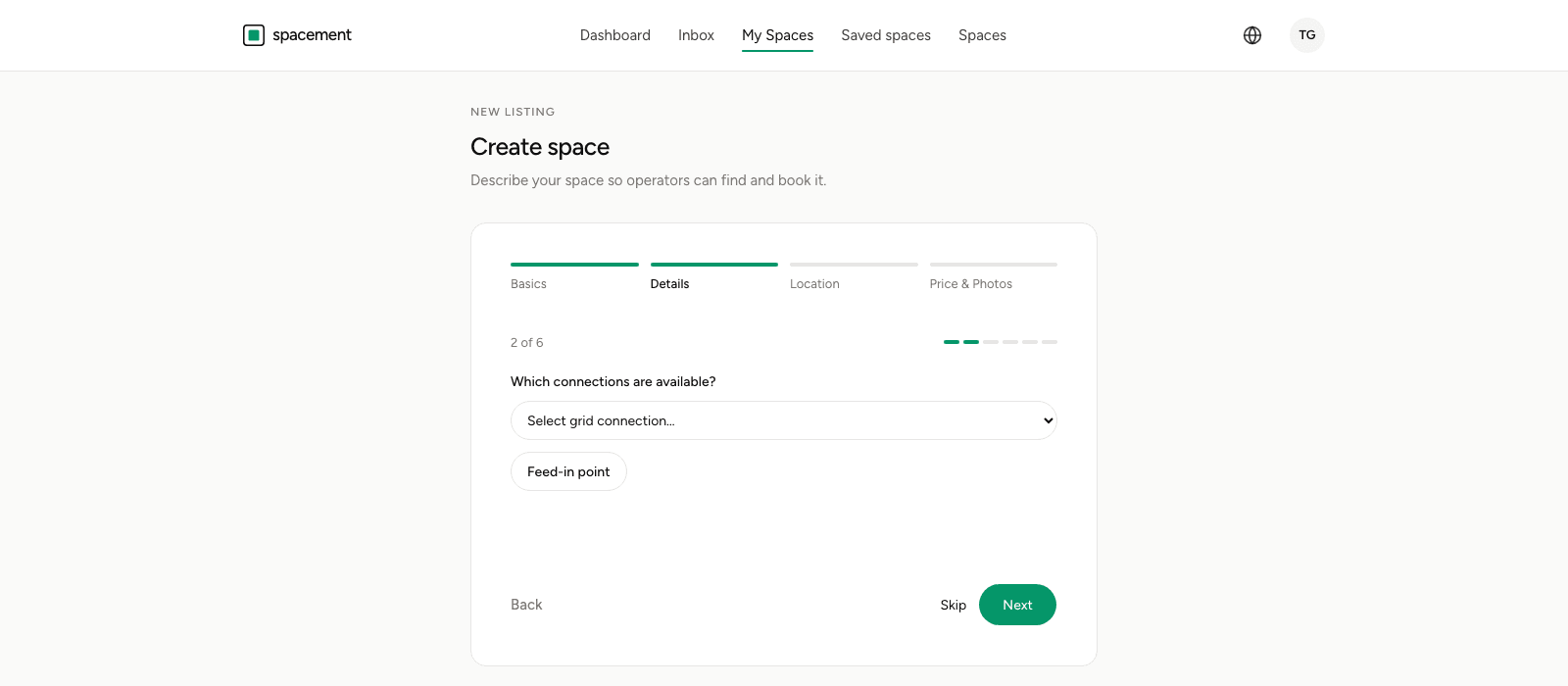
The grid operator field is self-reported and we do not verify it. It still helps, because an investor can tell early who they will be dealing with.
What belongs in the conversation rather than the listing
Three things to settle before anything is signed, none of which fits sensibly into a listing.
The term. An installation has to pay for itself over many years, so the contracts are correspondingly long. Ask early what duration the investor is planning for.
The safeguards. Who is liable for damage to the roof, who for the installation, what happens if the building changes hands, and whether it is secured in the land register.
Your own electricity. Whether you can use the power generated, and on what terms, differs considerably by model. If that matters to you, say so in the first conversation rather than the third.
A list of the questions to settle before signing is in From unlock to contract. How to build the listing overall is in Publishing a space.
One closing note: what is written here is orientation on which details make a listing usable. It replaces neither a professional assessment of your roof nor legal advice on the contract.
Preguntas frecuentes
- How large does a roof have to be?
- The investor decides. Providers quote figures in the several-hundred-square-metre range, though grid connection and structural capacity often weigh more than area alone.
- Do I have to pay for a structural report?
- Usually not. In the common models the investor covers the assessment. Settle it explicitly before anyone goes up on the roof.
- Does the roof have to face south?
- No. South at a shallow pitch counts as ideal, and east-west layouts are standard on flat roofs. Just state the actual orientation.
- What about my own electricity use?
- That is negotiable and differs by model. Raise it early if you want to use the power yourself.
- How long do these arrangements run?
- Considerably longer than an ordinary letting, because the installation has to pay for itself over many years. So the term belongs in the first conversation.