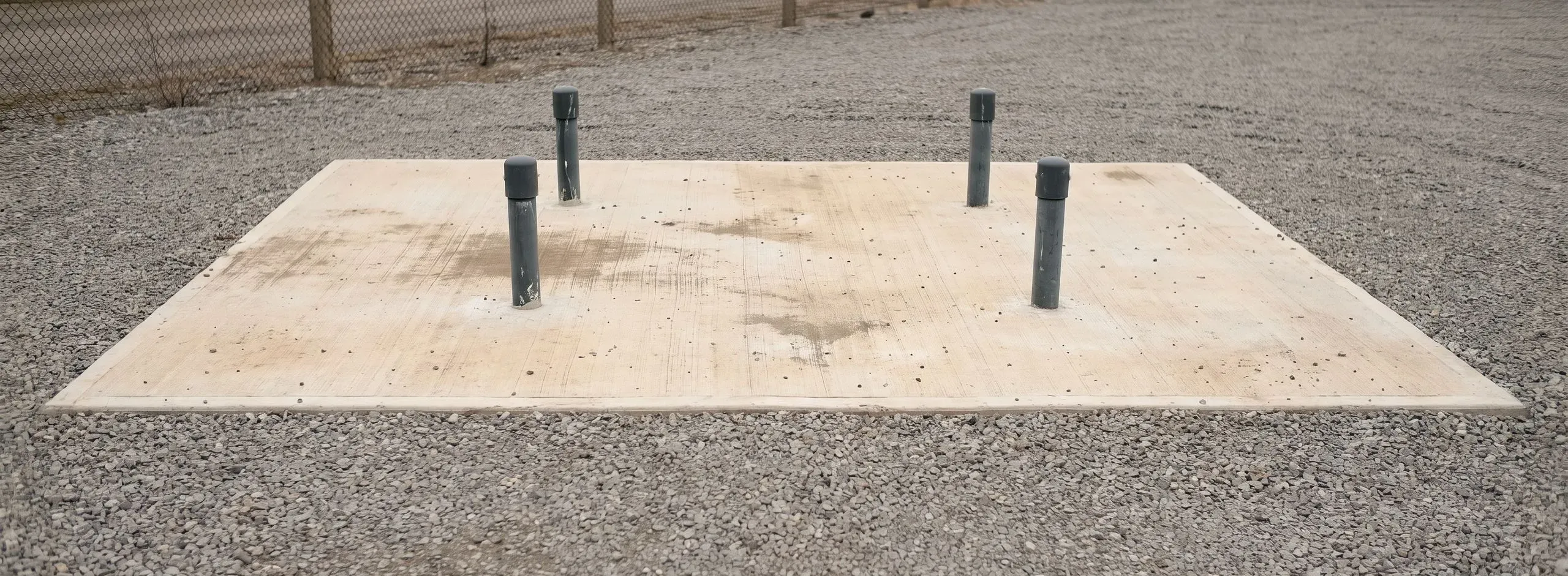
Offering space for battery storage
Grid connection, ground, access and clearances: what a storage project asks of a site, and which details help early on.
· Lukuaika 2 min
Tämä opas on saatavilla saksaksi ja englanniksi. Luet nyt englanninkielistä versiota.
A battery storage system is a construction project, not a device you set down. An operator checks accordingly closely beforehand, and accordingly much can be written down in advance.
The grid connection decides first
As with solar, what comes first is not the area but the question of where the electricity goes and where it comes from. A storage system wants to charge and to feed in, and both need a connection point with capacity.
What helps: how far away the nearest substation or transfer station is, whether medium-voltage supply already exists on site, and which grid operator is responsible. You can enter the grid operator when publishing, as a self-reported field. It is not verified, but it helps, because it tells the other side early who they will be dealing with.
If the nearest connection point is far away, that is not disqualifying, but it belongs in the listing. Leaving it out wastes both sides' time.
The ground
A storage system sits on a foundation, and that needs load-bearing ground. Anything you know about the site helps: is it surfaced, gravelled, undisturbed soil. Is there an existing use, an old foundation, a sealed area.
Whether it bears the load is for the operator to establish. Your job is to describe the starting condition correctly.
Access and surroundings
Delivery. Storage units arrive on low-loaders and are craned into place. How wide is the approach, what turning radii are there, are there height restrictions, does the route carry heavy plant.
Maintenance. Somebody has to come back regularly. Passable year-round, or closed in winter.
Surroundings. What stands nearby, does anybody live next door, how far is the nearest building complex. Fire safety, clearances and noise are governed by technical standards and local requirements, which the operator checks during planning. Your description should give them honest inputs for that.
Security. Is the site fenced, is there lighting, is it overlooked.
What belongs in the conversation
The term and the end of it. Equipment like this stays a long time. Settle early what duration is planned, who dismantles at the end, and what condition the site is left in.
The safeguards. What happens if the property changes hands, and whether the arrangement is secured against the land. At this scale that is customary.
Consents. If you lease the site yourself or it sits within an owners' association, the consent question belongs settled before anybody plans.
The list of questions before signing is in From unlock to contract. The related case for roofs is in Offering roof space for solar.
And as with every technical project: what is written here helps with your listing. It replaces neither a professional assessment nor legal advice.
Usein kysytyt kysymykset
- How much area does a storage system need?
- That depends entirely on the design. Give the contiguous usable area in metres and an operator can work it out.
- Does the site have to be serviced already?
- No, but an existing grid connection nearby is the single most important factor for feasibility.
- What about fire safety and clearances?
- Technical standards and local requirements apply. The operator checks that during planning; your job is to describe the surroundings honestly.
- How long do these contracts run?
- Considerably longer than an ordinary letting. Ask early about the intended duration and what happens at the end.
- Can I offer a site I lease myself?
- Only with the owner's consent. Settle that before anybody starts planning.