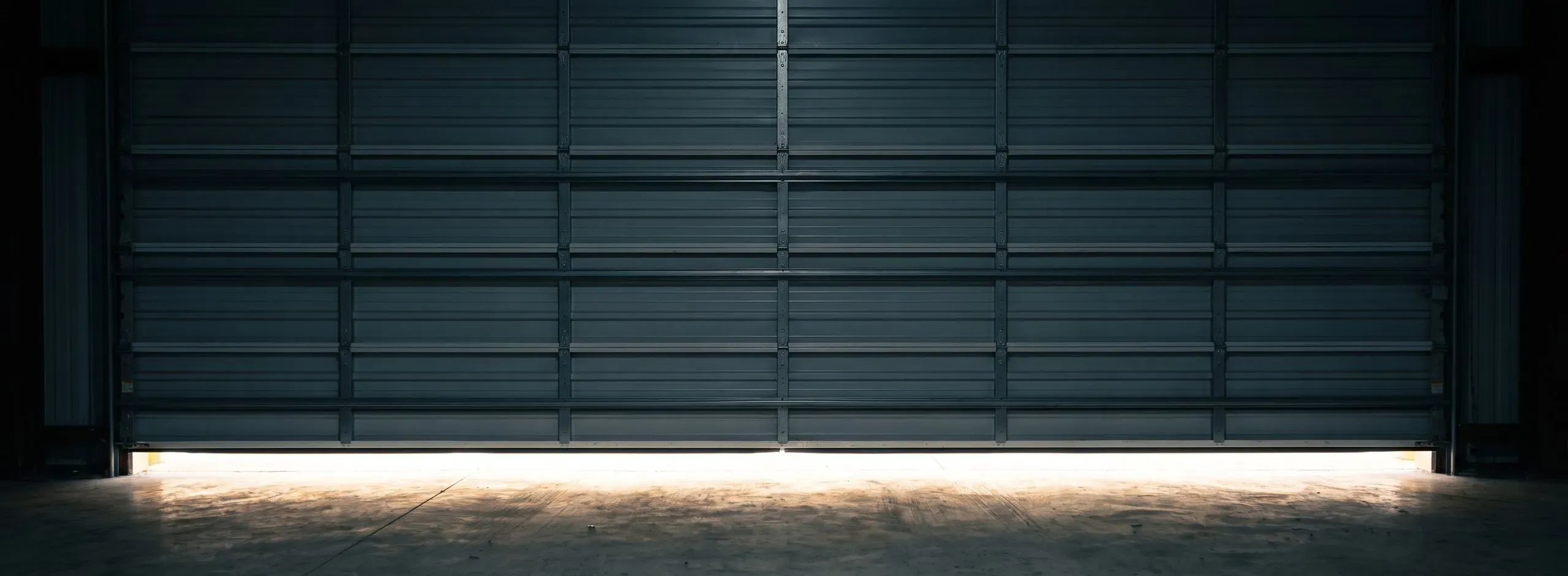
Offering storage and yard space
Access, door height, floor and dryness: which details make a storage space lettable, and why the approach often matters more than the square metres.
· 3 min de leitura
Este guia está disponível em alemão e inglês. Está a ler a versão inglesa.
With storage and yard space, almost nobody asks about square metres first. They ask whether you can get in, what fits, and whether what goes in comes out intact. Which details make a listing usable follows from that.
Access decides first
A space you cannot deliver to is not a storage space. So how to get there comes first.
Useful: the width of the approach, turning radii, height restrictions from archways or doors, and whether a lorry can turn or reverse in. If only a van fits, that is not bad news; it narrows the field, and it does so beforehand rather than afterwards.
Manoeuvring room belongs with it. A door halfway down a narrow street is a different proposition from a yard with space.
Door and height
Door width and height in metres. That is the detail deciding half the suitability, and it is missing from most listings.
Clear height inside, meaning up to the underside of beams, pipes and lights. Twelve square metres at two metres is a different offer from twelve at four.
The type of door: sectional, roller, hinged, loading dock or at grade. A dock is a selling point in itself, and so is at-grade access, depending on who is looking.
Floor and climate
Load capacity. Concrete, asphalt, screed, undisturbed ground. If you have a figure for the load, give it; otherwise describe the build-up.
Dryness. This is the most common disappointment with storage space. Does water stand in heavy rain, is there damp on the walls, is the space ventilated. Being honest here in advance saves a termination after the first wet autumn.
Temperature. Heated, frost-free or unheated. That decides what can be stored more than any other detail.
Access and security
When can it be reached, with which key or code, and does somebody have to be present. Round-the-clock access is an argument many operators weigh above price.
For security, a list of what is there is enough: fencing, a lockable door, lighting, a camera, whether it is overlooked from the street. What is absent need not be listed, but should hold up when asked.
Outdoor areas
Not everything has to be under cover. Yard space for containers, vehicles, building materials or trailers is in demand, and the same questions apply in a different order: surface, whether it is made up, access, fencing, lighting.
For outdoor areas, add whether the ground is level and whether it is cleared in winter.
What belongs in the conversation
Two points that do not fit into a listing and that cause the trouble later.
What may be stored. Some of it is a question of insurance, some of permits, some of your own preference. Settle it before committing, not after the first delivery.
Who is liable for what. For the space, for the goods, for damage to the building during delivery. The full list of questions is in From unlock to contract.
How to build the listing is in Publishing a space, and what good photos show in Photos and descriptions.
Perguntas frequentes
- Does the space have to be heated?
- No, but it decides what can be stored. Say whether it is heated, frost-free or unheated; that narrows enquiries usefully.
- How important is door height?
- Very. It decides whether delivery is possible at all. Give door width, door height and the clear height inside.
- Is it area or volume that counts?
- Both. Square metres say nothing on their own if the ceiling is low. Include the clear height.
- Do I need an alarm system?
- No. But write what is there: fencing, lighting, a camera, a lockable door. What somebody is willing to store depends on it.
- Is outdoor space wanted too?
- Yes, for anything weatherproof. Then name the surface, whether it is made up, and whether the area is overlooked or fenced.