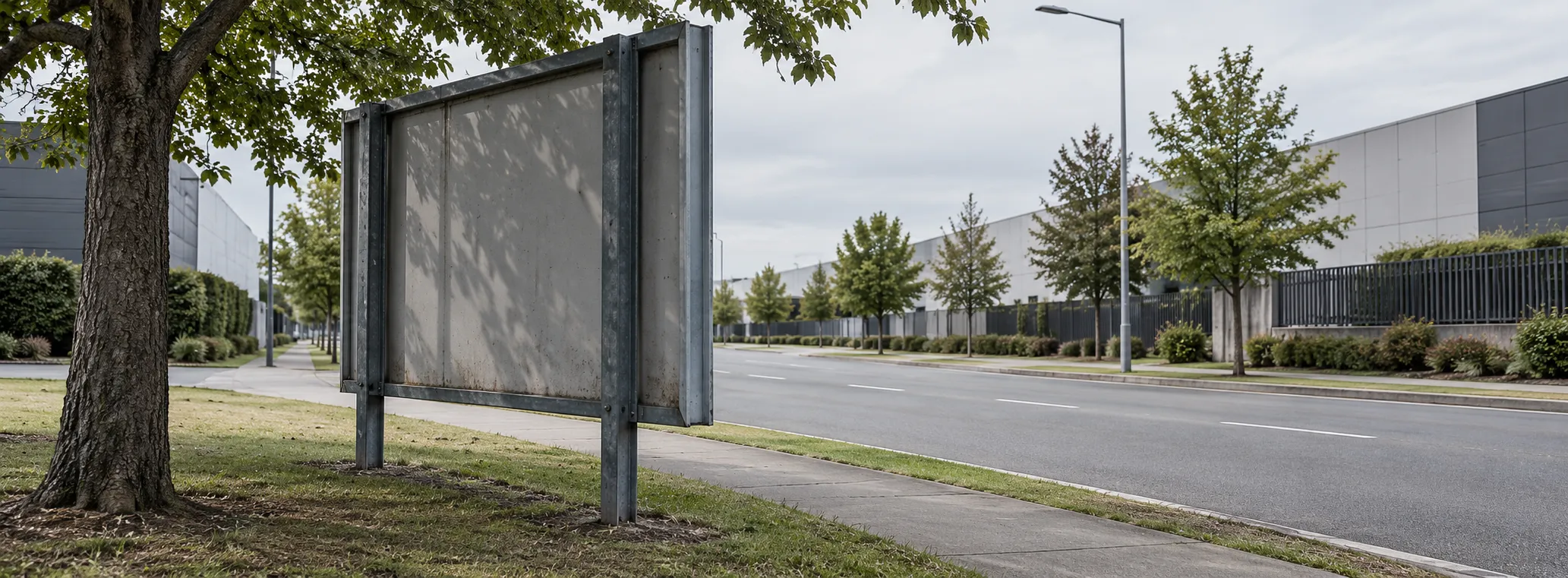
Rent advertising space: check the site and visibility
Compare advertising sites in person: record viewing direction, obstructions, lighting, traffic figures and installation questions before committing.
· 4 min read
When you want to rent advertising space, assess it from the viewing direction of your intended audience. A photograph taken directly in front of the installation does not establish what people see along their actual route. Record observations, offered services and unresolved questions separately before committing.
Offering advertising space explains the information hosts provide. This checklist takes you, as an operator, through the comparison of specific sites.
Set the objective before choosing a location
First describe what you intend to do with the space. Should it point to a nearby shop, display a brand or form part of an advertising installation you operate? Specify the audience, intended period of use and type of creative.
Then establish the direction from which the surface should be seen. Pedestrians approaching an entrance have a different view from people on the opposite pavement. Assess each route relevant to your proposal separately.
A large installation alone does not answer those questions. Start with the actual visible area, then establish which design and format could work within it.
Check viewing direction and distance on site
Choose observation points you can access safely and lawfully. Do not enter the carriageway or stop in the road to take a photograph. Where access is difficult, ask the host to provide suitable views.
From those points, follow the intended approach. Note when the surface first becomes visible, the angle at which you see it and what occupies the foreground. Record whether you could assess it meaningfully from the intended distance.
Separate your observation from the eventual creative. A clearly visible empty frame does not confirm that every type size or design will work within it. Have the proposed artwork assessed for the intended view.
Record obstructions and light at different times
Look at trees, signs, canopies and neighbouring installations. Ask about seasonal changes. A photograph of bare trees does not establish the view when they are in full leaf.
Also consider whether parked vehicles could obstruct the surface. If the visit gives you only a brief snapshot, record that limitation. An empty row of parking bays does not promise the same conditions later.
If lighting matters to the proposal, inspect it at an appropriate time. Ask about switching hours, power supply and responsibility for faults. A simple visit record might look like this:
| Photograph or observation | What to record alongside it |
|---|---|
| View along the intended approach | Position, direction and approximate distance |
| Foreground and side view | Visible obstructions and unresolved viewing angles |
| Daylight and darkness where relevant | Date, time, weather and lighting conditions |
| Situation not yet assessed | Missing view, season or question for the host |
Frame photographs of the surface and its surroundings to avoid capturing people and vehicle registrations wherever possible. Keep the record focused on the site assessment.
Ask where traffic figures come from
If an offer includes a traffic or reach figure, ask for its basis. Establish whether it describes vehicles, pedestrians or calculated advertising contacts. Ask for the source, measurement period, direction covered and method.
Carry that context into your comparison. Do not compare figures with different units or time periods without examining the difference. Where the basis is missing, mark the reach figure as unresolved.
A visit can provide an impression, but it does not replace a reliable measurement. Do not infer guaranteed contacts, clicks or sales from it.
Establish what the offer includes and its costs
Ask explicitly what you would receive: a wall or part of a plot for your own installation, an existing advertising surface or particular display times. For an existing installation, establish who operates it and who controls changes of creative.
Ask the same questions of each offer:
- Which term, operating hours and services are included?
- Who handles design, production, installation and later changes?
- What access is available for work on the installation?
- How are electricity, maintenance and additional work charged?
- Who removes the installation or creative when the contract ends?
Record confirmed, estimated and unresolved costs separately. Also establish which advertising content is excluded. An offer to rent the site does not automatically accept every proposed creative.
Relate documents to the specific proposal
If the host mentions permission or consent, ask for the document and what it covers. Establish whether the proposed installation, lighting and use are actually included or still need assessment.
Technical questions about fixings and installation belong with the appropriate professionals. Unresolved approval questions belong with the responsible authorities. This article replaces neither a technical assessment nor legal advice.
Make contact with specific questions
Use the advertising space search to compare public listings. Searching and filtering spaces explains the controls. Exact addresses and contact features belong to paid operator access; the current conditions are on the operator pricing page.
In your enquiry, state the intended use, period and unresolved points from your visit record. Unlocking a listing does not reserve a space. Establish availability and the rental contract directly with the host; Spacement does not handle rent payments. Further discussion points are in From unlock to contract.
Common questions
- How do I check an advertising site's visibility?
- First establish whom you want to reach and from which direction. Inspect the site from safely accessible points along that approach. Record distance, angle, obstructions and lighting at relevant times.
- Are traffic counts the same as advertising contacts?
- Only use a figure once you understand what it describes. Ask for its source, measurement period, direction and method. Vehicles, pedestrians and stated advertising contacts are different measures and do not confirm revenue.
- What should an after-dark visit establish?
- Check whether the offered lighting is actually operating and when it runs. Establish power supply, costs and responsibility for faults. A lamp visible during daylight does not confirm those arrangements.
- Am I renting a site or buying advertising time?
- The specific offer needs to make that clear. Establish whether it concerns a site for your own installation, an existing advertising surface or particular display times. The included services and costs will differ.
- Does a listing confirm permission for my advertising installation?
- No. Ask for existing documents and their relationship to the proposed installation and use. Unresolved approval questions need to be clarified with the responsible authorities. Spacement does not grant planning approval.
- Can I book an advertising space through Spacement?
- You can view public listings and use contact features with paid operator access. Establish availability, services and the rental contract directly with the host. Spacement does not book the space or handle rent payments.